
Arrest Warrants in Frederick County
An arrest warrant is court-authorized process: it directs an officer to take a person into custody and bring them before a judge. Virginia law spells out what the order needs. A sworn complaint supplies the facts, a magistrate or judge reviews probable cause, and the warrant must identify the offense and the person and direct a proper officer to execute it. Bond terms and the next court date depend on the order itself and the case built around it. Frederick County publishes no sheriff-hosted roster of active warrants. Searchers can pull covered case details through OCIS or the local GDC system, then ask the issuing clerk or the Sheriff's Warrants line what is current.
Frederick County Arrest Warrant Probable Cause
Virginia Code §§ 19.2-71 and 19.2-72 tie arrest process to legal authority plus a sworn factual basis. Someone presents information to a judicial officer. That officer reviews probable cause. Only then is any process directed for execution, and some private felony complaints carry added authorization requirements. No one in Frederick County can simply add a name to a public roster. Once issued, a case can move through service, a first appearance, magistrate bond review, and a hearing. Ask the clerk which court controls the file. The Sheriff serves process, but recalling an order belongs to the court that issued it. Virginia Code § 19.2-72 sets out what a warrant must contain.
What a Frederick County Arrest Warrant Contains
A Virginia warrant form can carry the court and case number, the accused, the offense or code section, a sworn complaint reference, the officer's direction, the issue date, bond action, and the service return. Frederick County publishes no local warrant-number format or list of active-status codes. Public case systems may show some fields while leaving the full process and its execution status out of view.
| Court and case | Identifies the issuing file and clerk to contact. |
|---|---|
| Process type | Distinguishes an arrest warrant from a summons, capias, or search warrant. |
| Offense | Shows the cited charge or code where public. |
| Bond direction | Ask the magistrate or clerk for the current order and terms. |
| Return or service | May be updated after action; verify with the Sheriff or court. |
Frederick County Arrest Warrant Clerk and Sheriff Roles
The clerk of the originating court controls the file. The Sheriff and local police handle service. In Frederick County, Circuit Clerk Sarah J. Kahle holds the felony records, the Frederick/Winchester GDC Clerk, Tamara Heishman, takes adult misdemeanor and traffic matters, and Lisa M. Eaton's clerk office handles JDR cases under stricter confidentiality limits. Court counters are generally open 8:00 a.m. to 4:00 p.m., though that is not a published surrender schedule. For district cases, the GDC page lists the clerk and docket schedule, and Frederick/Winchester GDC information shows the district route.
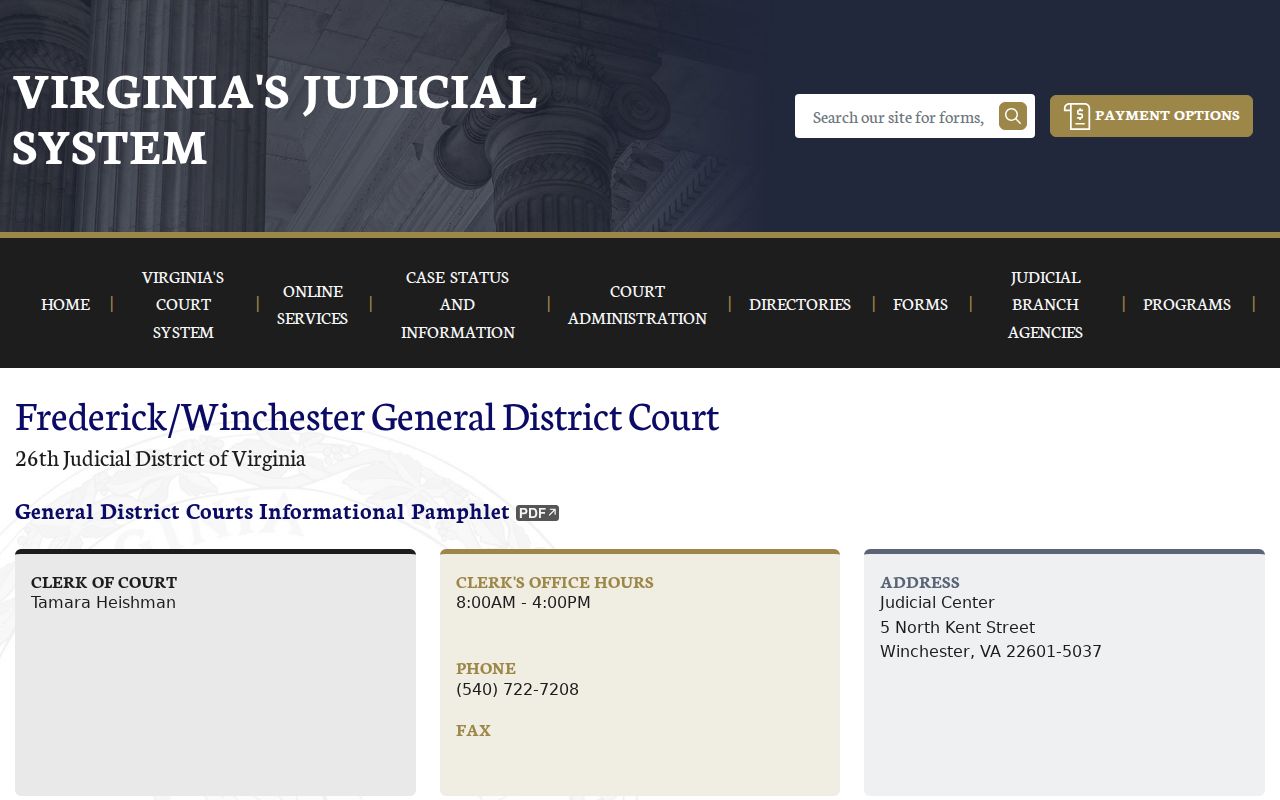
The clerk's page gives Frederick County readers the local docket and records contact, apart from warrant service.
How Frederick County Arrest Warrants Are Served
Once issued, a warrant may travel through criminal-justice data systems and be served by the Frederick County Sheriff, town police, Virginia State Police, or another authorized officer. No single unit is named publicly for every warrant. No service schedule is published either. Older Sheriff materials describe Patrol serving warrants while Court Security and Civil Process handled other duties, but those papers are not a current assignment list. For an execution or return question, call the Sheriff's Warrants line at 540-662-2921. The clerk remains the right source for what the court ordered.
A Summons Differs From an Arrest Warrant
A summons tells a person to appear in court and does not authorize an arrest on the spot. A capias or bench warrant usually follows a missed appearance or a violated court order. A search warrant lets officers hunt for evidence, not people. All of these can surface in related Frederick County case records, yet each rests on a different legal basis with different public-access rules.
| Process | Main purpose | First confirmation route |
|---|---|---|
| Arrest warrant | Directs an officer to arrest and return a person to court | Issuing clerk and Sheriff Warrants |
| Summons | Orders appearance at a date or time | Clerk named on notice |
| Bench process | Addresses a missed setting or court condition | Clerk for the underlying case |
| Search warrant | Allows search under a separate affidavit and order | Originating court, subject to sealing |
Confirm a Frederick County Warrant Before Acting
If an arrest warrant might concern you, do not trust a third-party caller or a single web result. Find the court and case number if you can. Then call the Frederick County clerk and ask whether the warrant is still active, whether a lawyer should reach out to the court, and whether an appearance or bond arrangement is expected. Follow up with Sheriff Warrants for service or surrender routing. The county publishes no walk-in procedure or bond schedule.
Important: Confirm any court date, bond, or surrender instruction through a published court or Sheriff number before traveling or paying.
After the court acts, keep a signed order or receipt, and ask the Frederick County clerk and Sheriff how long their records take to update.
Frederick County Arrest Warrants and Federal Court
Frederick County sits in the Harrisonburg Division of the U.S. District Court for the Western District of Virginia. A federal case never becomes a county Circuit or GDC matter. Public dockets are searched through PACER/CM-ECF, but sealed documents and warrant status may not appear there. The U.S. Marshals Service and other federal authorities execute federal warrants. The WDVA where-to-file page names Frederick County under Harrisonburg; reach that clerk through official court listings rather than a number from an unsolicited message. Frederick/Winchester GDC information is not the federal route, but WDVA division information is.
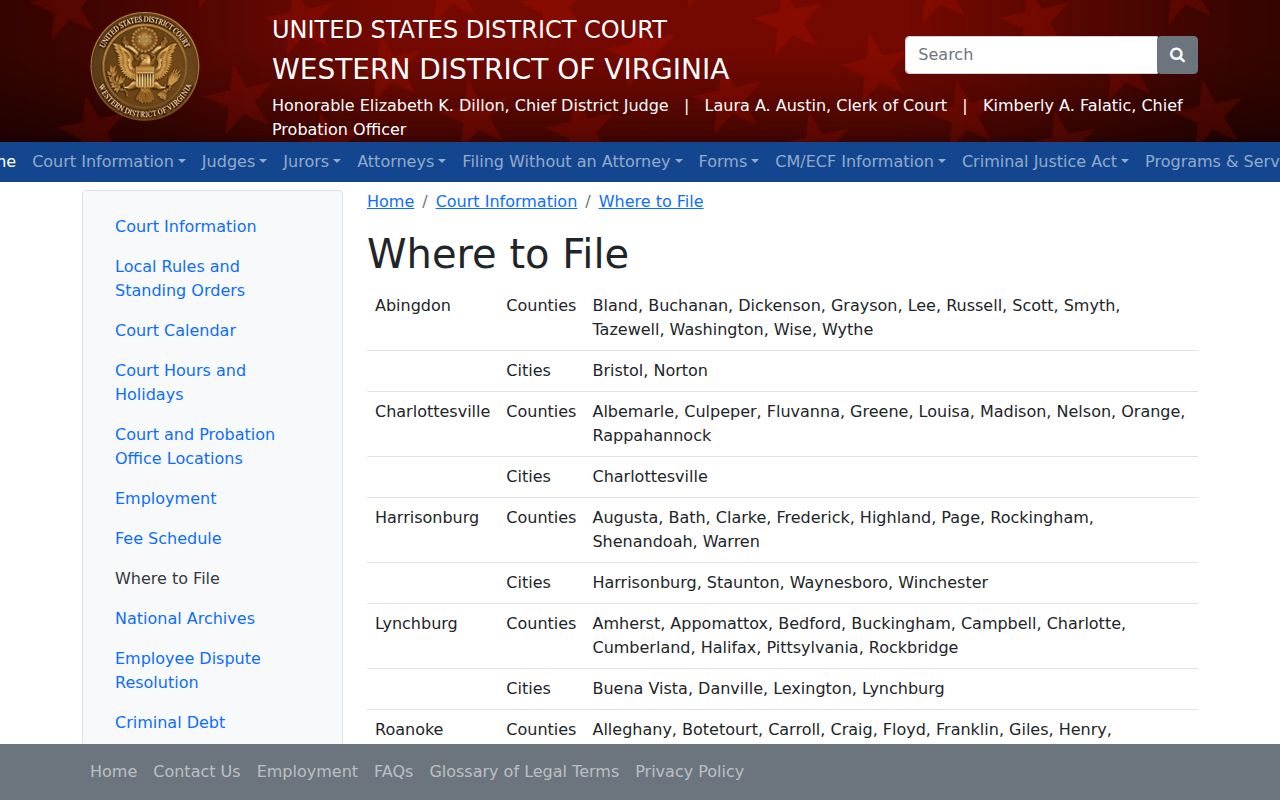
The court's own pages name the proper federal division for Frederick County cases, and federal courthouse juror and divisional-office information explains identification and entry requirements.
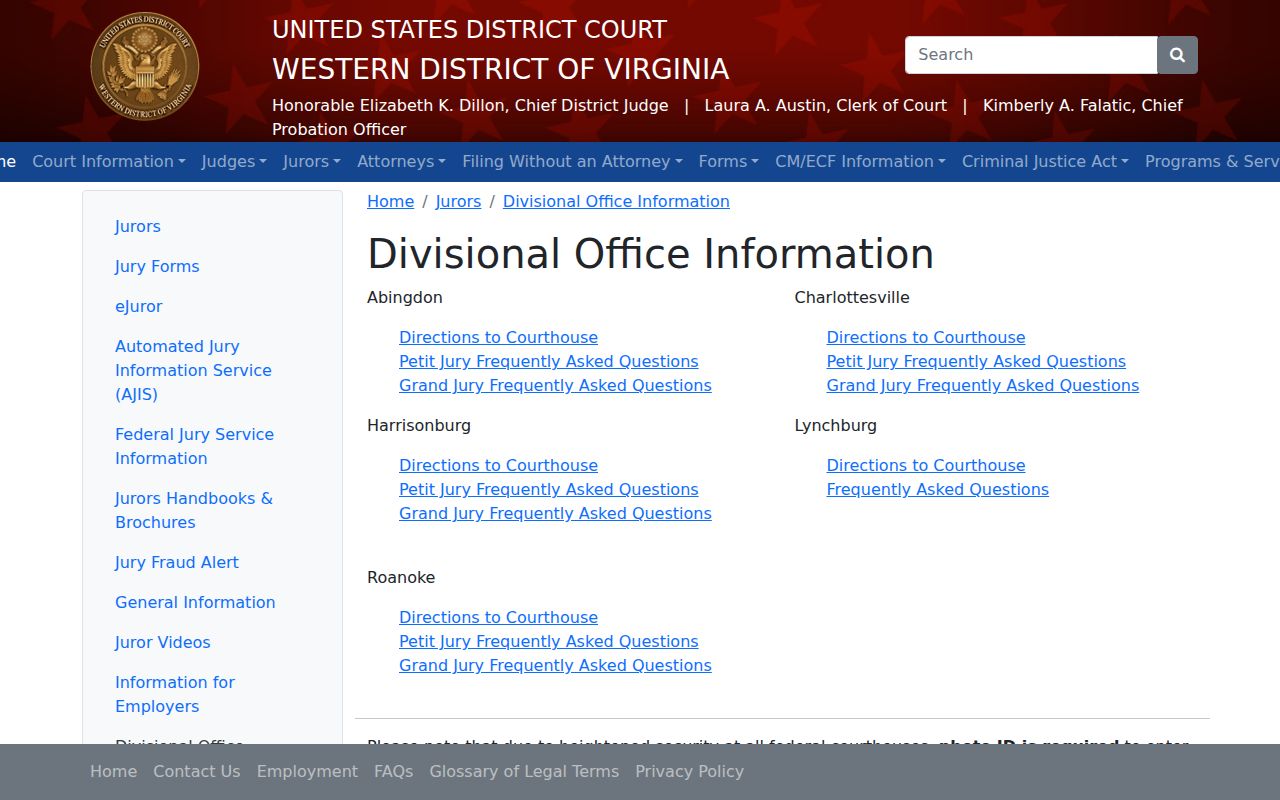
Federal courthouse entry rules are separate from state court counter practice.
Frederick County Warrant Extradition Route
Not every warrant paper means the same thing. A Frederick County arrest warrant, an out-of-state warrant, and a Governor’s Warrant for extradition each travel a different route. Virginia’s Secretary of the Commonwealth runs the executive side when another jurisdiction wants a person returned. So if a notice hints at interstate return, confirm which office actually issued it before you call a local court. The Virginia extradition information page lays out the state’s process from start to finish.
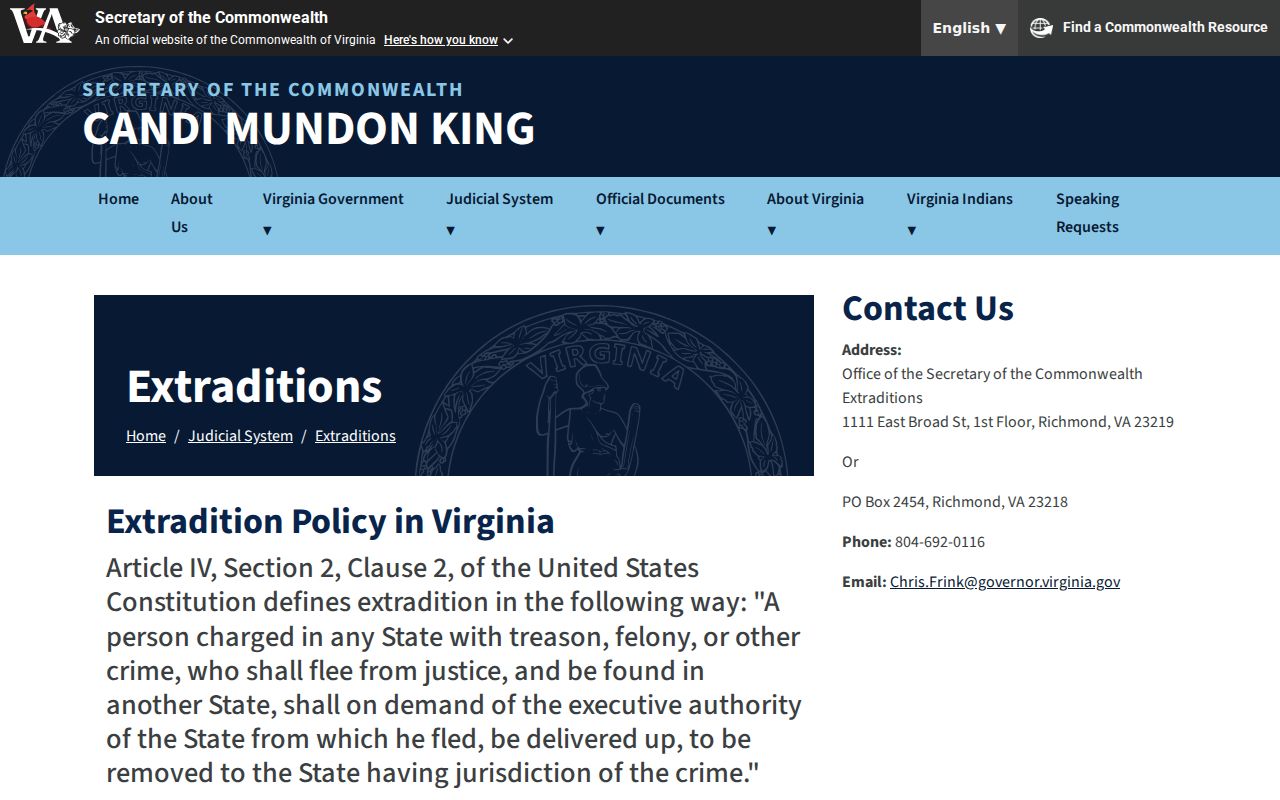
The state page separates executive extradition procedure from an ordinary county case.
What to Do If There Is a Frederick County Warrant
Start with the clerk of the issuing court. Confirm the process there and ask whether an attorney should arrange your appearance. After an arrest, the Northwestern Regional Adult Detention Center handles booking and magistrate bond review, and it recognizes secured, unsecured, and personal-recognizance bond types. The jail posts no Frederick County warrant bond schedule, no payment window, and no surrender desk. Keep that in mind. Posting bond does not dismiss the case behind the warrant. For the wider county route, the Frederick County warrant overview maps the separate roles of the clerk, the Sheriff, the jail, and records. Bring your case number and any court order whenever you speak with one of those offices.